Rulers Out Of Touch With Reality

While millions suffer economically, the Speaker of the House sees fits to commute in a private Boeing 757 at a weekly cost of $120,000.  Brings to mind the old saying “watch what they do, not what they say”.

The ruling elite in Washington is out of touch and out of control,  interested primarily in furthering their financial well being and imperial life style.   This one example of outrageous conduct by an elected official was exposed by The Burning Platform (follow link for full read).

The hypocrisy of the ruling elite in Washington DC is breathtaking. Why can’t Pelosi fly coach to California? What makes her better than you and me? The attitudes and practices of our rulers are disgusting. 20% of the U.S. population is unemployed and this woman has the gall to spend $120,000 per week to jet back and forth across the country. This is utterly putrid.

Since she only works 3 days a week, this gas guzzling jet gets fueled and she flies home to California , cost to the  taxpayers of about $60,000, one way! As Joe put it, ‘Unfortunately we have to pay to bring her back on Monday night.’ Cost to us another $60,000.

Folks, that is $480,000 per month and that is an annual cost to the taxpayers of  $5,760,000.

(0) Comments    Read More   

Lost American Initiative

Whatever happened to the “can do” attitude that allowed this country to put a man on the moon when such a feat was perceived possible only in science fiction movies?   Essential and long overdue improvements to US infrastructure now take decades as work is delayed by bickering special interest groups, mindless bureaucrats and endless state and federal regulations.

The recent opening of 3 new runways at 3 major airports is cause for celebration, but the amount of time required to complete these long overdue expansions is appalling.  Hundreds of billions of dollars a year in energy and human resources are dissipated each year as we still rely on unexpanded and unimproved infrastructure built decades ago.

Consider the time required to reap the benefits of 3 new airport runways.

In the eight months since a new runway opened at the U.S.’s second-busiest airport, plagued for decades with lengthy flight delays, O’Hare has operated with above-average on-time arrivals—better than Dallas, Atlanta and Denver in 2009, according to FlightStats.com. O’Hare’s on-time arrival rate improved by 27% so far this year compared with the same period of 2008. That was twice the improvement of any other big U.S. airport.

The new runway, opened last Nov. 21, gets much of the credit. While airline reductions in flight schedules have eased congestion and reduced flight delays, the ability to now land three planes simultaneously in most weather conditions instead of two jets at a time has turned O’Hare from a choke point into a reliable airport.

Because of the enormous cost and heated legal battles with neighbors and environmentalists, building runways at big airports is a rarity—and a major reason air travel has been bogged down in the past 10 years. Last fall, three major runways opened with much fanfare on the same day in Chicago, Seattle and Washington, D.C. Seattle’s new runway took two decades of planning, approval, court fights and construction. O’Hare’s new runway was the first at that airport in 37 years.

Economic growth relies on an efficient transportation system.  The fact that the second busiest airport in the US could not be expanded for 37 years speaks volumes for the inability of government to “get things done that need to be done”.  Think about this the next time you are wasting 8 hours of your life due to a flight delay.

According to the FAA, 30,000 flights at O’Hare were delayed because of weather in the first five months of 2008. This year through May, only 8,800 weather-delayed flights were recorded “and we had a crazy winter this year with all kinds of snow,” says Ms. Drouet.

Consider the similar multi decades delay for Seattle to add an additional runway:

At Seattle-Tacoma International Airport, delays typically stacked up in the frequent fog and rain because the two existing runways were too close together to have planes landing side-by-side in poor visibility. So the airport wanted a third runway far enough from the existing runways so planes could land two at a time in any weather.

The project took more than 20 years and cost more than $1 billion. Heavy construction started in 2004.

Stimulus Spending Largely Wasted

A significant amount of the country’s infrastructure was built during the depression.  The interstate highway system was built during the Eisenhower administration before many of us were born.   How much better off would all of us and our children be if necessary improvements  to the country’s infrastructure was addressed in a comprehensive, time sensitive manner?

“Stimulus spending” of almost a trillion dollars was deployed to reduce taxes, enhance special interest spending and pass out funds to those who would most quickly spend it at Walmarts on Chinese imported goods.  This type of foolish spending leaves us another trillion in debt while keeping Chinese factories busy - it does not leave the country with anything of lasting value.

Vacuous Leadership

Of course, even if every dollar of stimulus spending had been directed exclusively to infrastructure enhancements, it would not be spend for 15 years if the airport runway example applies.    Therein lies the pitfalls of democracy - those making the spending decisions are more focused on the next election rather than the strategic long term needs of the Country.

(0) Comments    Read More   
Posted on 22-05-2009

American Dream Turning Into A Nightmare

Hard questions are being asked as we confront major issues that will challenge  our concepts of traditional American culture and society.   The ongoing financial crisis is exposing the myth that America has no fiscal limitations  and is  able to provide the benefits, wealth and security that many believe they are “entitled to”, simply because they are Americans.

The reality for many is that the “American Dream” never arrived and for many others it is about to disappear.   California is the example to the rest of the Nation that every promise made cannot be kept.  Governments cannot create wealth by dividing wealth nor can they create wealth through unlimited borrowing and spending.  The standard of living for many will decline as promises made cannot be kept.

Our President Isn’t Quite As Advertised - Karl Rove

As a candidate, Mr. Obama promised to end the Iraq war by withdrawing all troops by March 2009. As president, he set a slower pace of drawdown. He has also said he will leave as many as 50,000 Americans troops there.

These reversals are both praiseworthy and evidence that, when it comes to national security, being briefed on terror threats as president is a lot different than placating MoveOn.org and Code Pink activists as a candidate. The realities of governing trump the realities of campaigning.

We are also seeing Mr. Obama reverse himself on the domestic front, but this time in a manner that will do more harm than good.

Mr. Obama campaigned on “responsible fiscal policies,” arguing in a speech on the Senate floor in 2006 that the “rising debt is a hidden domestic enemy.” In his acceptance speech at the Democratic National Convention, he pledged to “go through the federal budget line by line, eliminating programs that no longer work.” Even now, he says he’ll “cut the deficit . . . by half by the end of his first term in office” and is “rooting out waste and abuse” in the budget.

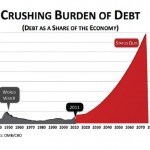
However, Mr. Obama’s fiscally conservative words are betrayed by his liberal actions. He offers an orgy of spending and a bacchanal of debt. His budget plans a 25% increase in the federal government’s share of the GDP, a doubling of the national debt in five years, and a near tripling of it in 10 years.

On health care, Mr. Obama’s election ads decried “government-run health care” as “extreme,” saying it would lead to “higher costs.” Now he is promoting a plan that would result in a de facto government-run health-care system. Even the Washington Post questions it, saying, “It is difficult to imagine . . . benefits from a government-run system.”

Mr. Obama either had very little grasp of what governing would involve or, if he did, he used words meant to mislead the public. Neither option is particularly encouraging.

Terminating Illusions In California - Wesley Pruden

California is the beta state, where everything new is tried and then exported, true or not. Rap, rock, lavender love, student riots, Arianna Huffington, hot rods and the Hula Hoop. Ronald Reagan and the tax revolt. The illusion that you can have it all, and somebody else will pay for it. This week California’s voters offered a view of what happens when big government finally grinds to a noisy halt. Barack Obama could take note.

Geithner Pledges To Cut Deficit

May 21 (Bloomberg) — Treasury Secretary Timothy Geithner said the Obama administration is committed to reducing the federal budget deficit after concerns rose that the U.S. debt rating may eventually be threatened with a downgrade.

The dollar, Treasuries and American stocks slumped today on concern about the U.S. government’s debt rating. Bill Gross, the co-chief investment officer of Pacific Investment Management Co., said the U.S. “eventually” will lose its AAA grade.

(0) Comments    Read More   

Can debt create prosperity?

A common question asked these days is,  if too much debt caused the financial  crisis, how can more debt solve the problem?  Most American families know that their basic problem is too little income and too much debt.  Common sense tells us that unless debt is balanced by inceasing income to service the payments, the end result is bankruptcy, and this rule applies equally to individuals and nations.

Obama’s Dangerous Debt

By Robert Samuelson

WASHINGTON — Just how much government debt does a president have to endorse before he’s labeled “irresponsible”? Well, apparently much more than the massive amounts envisioned by President Obama. The final version of his 2010 budget, released last week, is a case study in political expediency and economic gambling.

Let’s see. From 2010 to 2019, Obama projects annual deficits totaling $7.1 trillion; that’s atop the $1.8 trillion deficit for 2009.

One reason Obama is so popular is that he has promised almost everyone lower taxes and higher spending. Beyond the undeserving who make more than $250,000, 95 percent of “working families” receive a tax cut.

Consider the extra debt as a proxy for political evasion. The president doesn’t want to confront Americans with choices between lower spending and higher taxes — or, given the existing deficits, perhaps less spending and more taxes.

At best, the rising cost of the debt would intensify pressures to increase taxes, cut spending — or create bigger, unsustainable deficits.

At worst, the burgeoning debt could trigger a future financial crisis. The danger is that “we won’t be able to sell it (Treasury debt) at reasonable interest rates,” says economist Rudy Penner, head of the CBO from 1983 to 1987. In today’s anxious climate, this hasn’t happened. American and foreign investors have favored “safe” U.S. Treasuries. But a glut of bonds, fears of inflation — or something else — might one day shatter confidence. Bond prices might fall sharply; interest rates would rise. The consequences could be worldwide because foreigners own half of U.S. Treasury debt.

The Obama budgets flirt with deferred distress, though we can’t know what form it might take or when it might occur. Present gain comes with the risk of future pain. As the present economic crisis shows, imprudent policies ultimately backfire, even if the reversal’s timing and nature are unpredictable.

(0) Comments    Read More   

For some historical perspective on our current problems.

Chicago Tribune - 1934

1934

1934

Courtesy:  bp.blogspot.com

(0) Comments    Read More