As the U.S. economy continues its slow but steady march into economic depression, the Obama obsession with taxing millionaires and billionaires continues. Consider, Obama Tax Plan Would Ask More of Millonaires.
President Obama on Monday will call for a new minimum tax rate for individuals making more than $1 million a year to ensure that they pay at least the same percentage of their earnings as middle-income taxpayers, according to administration officials.
With a special joint Congressional committee starting work to reach a bipartisan budget deal by late November, the proposal adds a new and populist feature to Mr. Obama’s effort to raise the political pressure on Republicans to agree to higher revenues from the wealthy in return for Democrats’ support of future cuts from Medicaid.
Mr. Obama’s proposal is certain to draw opposition from Republicans, who have staunchly opposed raising taxes on the affluent because, they say, it would discourage investment. It could also invite scrutiny from some economists who have disputed Mr. Buffett’s assertion that the megarich pay a lower tax rate over all, because many in that group actually make more from wages than from investments.
In a speech on Thursday, Speaker John A. Boehner, Republican of Ohio, agreed with Mr. Obama that the deficit-reduction committee “can tackle tax reform, and it should,” to get rid of many tax breaks and allow for lower marginal rates. “Tax increases, however, are not a viable option for the joint committee,” Mr. Boehner said. Instead, he emphasized that meeting the deficit-reduction target should come largely from overhauling benefit programs like Medicare, Medicaid and Social Security.
The Obama proposal has little chance of becoming law unless Republican lawmakers bend. But by focusing on the wealthiest Americans, the president is sharpening the contrast between Republicans and Democrats with a theme he can carry into his bid for re-election in 2012.
Does the latest Obama tax proposal have merit or is it simply an attempt to capture votes based on a class warfare strategy? Half of all American households already pay zero income tax and the top 5% of Americans by income already pay 60% of all income taxes. As pointed out by the Wall Street Journal, there is No Easy Answer On Tax Issue.
“We’re approaching nearly half of the United States population that doesn’t pay any income taxes,” Mr. Perry said in Iowa, when asked about combating an “entitlement culture” in the U.S. “And I think one of the ways is to let everybody, as many people as possible…be able to be helping pay for the government that we have in this country.” In Nashua, N.H., Mr. Romney hit a similar theme: “We want to make sure people do pay their fair share.”
Of the poorest 20% of American households, those earning less than $16,812 a year, 93.4% pay no income tax. But even 30% of the middle class earning between $33,542 and $59,386 are exempt. Some Republican economists say the tax policies that cause this phenomenon have gone too far, contending that people who don’t pay income taxes have an incentive to support politicians who promise more federal programs, since they aren’t paying for them.
Moreover, they argue the tax code has become too dependent on too few people. Sixty percent of the income tax is paid by 5% of U.S. households, said Douglas Holtz-Eakin, a former Congressional Budget Office director who led domestic policy for John McCain’s 2008 campaign. “We’re going to have to have tax reform,” he said. “The system is broken.”
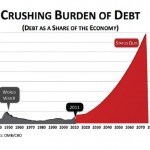
The U.S. tax code is a disgrace from every aspect but the odds of it being reformed by a deeply divided Congress are zero. Taxes on all income groups have been too low to cover massive government spending programs and the result is a debt crisis that threatens the solvency of the Nation. Our political leaders have promised unaffordable benefits to a vast array of constituents and paid for it by maxing out the Nation’s credit limits.
Ultimately, a solution to the Nation’s looming insolvency will require not only dramatic reductions of promised benefits but also large tax increases across all income levels.
Leaders Out Of Touch With Economic Reality
Politico reports that almost half the members of Congress are millionaires compared to just 1% of the subject population that they rule. Could this be one of the reasons why the Washington elite is so out of touch with the concerns of the average American?
The economy and pocket book issues are the main concerns of the electorate, regardless of whether they are currently employed or not. The unemployed see their ship sinking rapidly and those still employed are seeing their standard of living decaying at an alarming rate. While the average down on his luck American is worried about basic daily issues, the elite rulers of Washington are busily engaged on planetary quests to reduce carbon emissions and tell other nations how to conduct their affairs. The recent election results prove that voters believe that their basic concerns are not even on the “to do” list of the Washington elite.
Among the highlights: Two-hundred-and-thirty-seven members of Congress are millionaires. That’s 44 percent of the body – compared to about 1 percent of Americans overall.
CRP says California Republican Rep. Darrell Issa is the richest lawmaker on Capitol Hill, with a net worth estimated at about $251 million. Next in line: Rep. Jane Harman (D-Calif.), worth about $244.7 million; Sen. Herb Kohl (D-Wis.), worth about $214.5 million; Sen. Mark Warner (D-Va.), worth about $209.7 million; and Sen. John Kerry (D-Mass.), worth about $208.8 million.
All told, at least seven lawmakers have net worths greater than $100 million, according to the Center’s 2008 figures.
“Many Americans probably have a sense that members of Congress aren’t hurting, even if their government salary alone is in the six figures, much more than most Americans make,” said CRP spokesman Dave Levinthal.
Change We Didn’t Need
Here’s an interesting article from The Washington Post explaining why the 2008 election meant a lot less than it seemed to at the time. As the country discovers how deceptive, empty and expensive the promises of “change” are turning out to be, disenchantment is growing by the minute. Worth a full read…
In the aftermath of last year’s Obama sweep, we heard endlessly about its fundamental, revolutionary, transformational nature. How it was ushering in an FDR-like realignment for the 21st century in which new demographics — most prominently, rising minorities and the young — would bury the GOP far into the future. One book proclaimed “The Death of Conservatism,” while the more modest merely predicted the terminal decline of the Republican Party into a regional party of the Deep South or a rump party of marginalized angry white men.
This was all ridiculous from the beginning. The ‘08 election was a historical anomaly. A uniquely charismatic candidate was running at a time of deep war weariness, with an intensely unpopular Republican president, against a politically incompetent opponent, amid the greatest financial collapse since the Great Depression. And still he won by only seven points.
Public Angst Grows
Recent polls indicate increasing disaffection with the economic and social policies being forced upon the American public by the controllers in Washington. The American public thought that they voted for “change” but what we seem to be getting is micro management and obtrusive government interference into our lives.
The imperial Washington power structure seems oblivious to the fact that most Americans do not trust their government and believe that their financial situation is being made worse, not better, by government policies.
Here are the results from the latest polls that are beginning to show a major disconnect between the average American and an out of control power elite in Washington who believe they know “what is best for us”.
Why Obama’s Ratings Are Sinking
Instead, Gallup reports that disapproval of the president’s economic policies has grown to 49% in July from 30% in February. Even among the president’s core supporters, young people in the 18-29 age group, his overall approval has dropped 11 points since January.
Dissatisfaction is spreading into open protest as members of Congress try to explain the president’s policies to the public. Angry voters have engaged in high-profile confrontations in town-hall meetings around the country over a proposed health-care overhaul that protesters complain is unaffordable, socialistic, incomprehensible, and which their representatives have not even read.
The president’s sinking approval ratings are due precisely to his administration’s free-spending ways. In a July 2009 Gallup poll, the No. 1 reason for disapproval of the president’s economic policies was, literally, “spending too much.” In second place was the worry that the president is “leading the nation toward socialism” through government takeovers and bailouts.
In January 2009, the Pew Research Center asked about 2,000 Americans, “Do you think the government does more to help or more to hurt people trying to move up the economic ladder?” Amid the most frightening economic crisis in decades, more Americans still said the government would hurt than the number who thought it would help (50% versus 39%). Independent surveys from roughly the same period found that only one in five Americans believed he or she could trust the government.
Citizens will put up with a lot—but not with anyone who imperils our future.
There is no evidence that more than a minority of Americans accept the idea that a $17 trillion national debt, greater reliance on government for jobs and health, and hyper-progressive taxation offer the hope they deserve for themselves and their children. The administration and Congress can deny these truths with charges of un-Americanism and implausible conspiracy theories about the current citizen demonstrations. But opinion polls deliver an honest expression of unhappiness over the direction our nation is taking.
The ruling elite in Washington seem to be oblivious to or ignoring the reality of America’s growing disaffection with the course the nation is taking. The approval rating of Congress is at 30%. Only one if five Americans trust their government. Many Americans believe that government policies are financially bankrupting the country and the future of our children. It’s almost as if our country was being run by overlords, appointed by a foreign power. It’s time for change indeed - the problem is that the “changes” being forced upon us are not quite what we had in mind.
Postal Service Poor Analogy
Now we know why the President usually does not say much without the Teleprompter in front of him; why in the world would you mention the Post Office when trying to convince America that the government should take over the health care system?
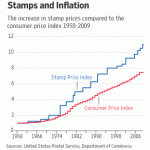
The Post Office is a prime example of how a lack of competition leads to high prices. Without competition, there is no need to worry about raising prices, providing good service or running an efficient organization - higher prices are simply passed on to the consumer. Productivity has been growing in the private sector for decades, especially with the efficiencies gained through the Internet. Yet year after year, the Post Office relentlessly raises rates far in excess of the consumer price index.

Cost Of A Stamp
Consider some of the other obnoxious results of a government run monopoly as detailed in a recent Wall Street Journal Opinion column:
Whatever possessed President Obama to mention the travails of the post office while discussing health care the other day, his timing was certainly apt. The Postal Service is headed toward a loss of $7 billion this year and another $7 billion in 2010.
Most mail today is delivered electronically via email. Traditional postal mail volume has fallen by nearly 20% since 2000, and the average household gets one-third fewer letters than a decade ago.
No private business in America could continually raise prices, lose billions of dollars and then hope to win back customers by promising poorer service.
Here’s a secret Washington doesn’t want to admit: That 14 cent per letter cost hike after inflation over the past 60 years imposes a $20 billion a year toll on the U.S. economy.
Most employees have no-layoff clauses, the starting salaries are about 25% to 30% higher than for comparably skilled private workers, and the fringe benefits are so expensive that the Government Accountability Office says $500 million a year could be saved merely by bringing health benefits into line with those of other federal workers.
The most overdue reform is to strip away the Post Service’s monopoly on first-class mail and bulk mail. Competition is the key ingredient to innovation, low prices and good service. This was Mr. Obama’s insight at his recent health-care town hall when he noted that “UPS and FedEx are doing just fine, right? No, they are. It’s the Post Office that’s always having problems.”
The argument has been made for 200 years that the postal monopoly is necessary to “bind the nation together.” Once that was at least plausible. But today the Internet delivers to the most remote corners of Alaska and the Badlands at one-one-hundredth the cost of snail mail. The sooner Congress requires the Postal Service to shrink and adapt to this reality, the smaller will be the losses imposed on taxpayers.
To expect a government health care monopoly to be run efficiently defies common sense and the American public knows it. The attempt to quickly ramrod massive health care legislation into law before allowing public discussion is an outrage against democracy.
The haste to force health care legislation upon the American public implies that those pushing for “quick” legislation knew that in the light of day, the American public would reject it or demand further information on the cost/benefits of proposed changes. Elected representatives are supposed to represent the public view rather than arrogantly assume that they know what is best. The uncontrollable, unaccountable and free spending mob now running the country needs a course in basic democracy.