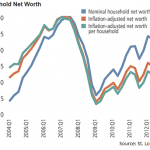
In April the Federal Reserve Bank of San Francisco released a report showing that the overall net worth and value of financial assets had completely recovered from the financial collapse of 2008-2009. Since the low point of the recession in early 2009 the net worth of Americans has increased by a massive $14.7 trillion and […]
If You’re Feeling Poorer That’s Because You Are – Net Worth Plunges For Average American
May 30, 2013 1 Comment
Have Your Assets and Net Worth Increased Since 2005?
April 23, 2013 Leave a Comment
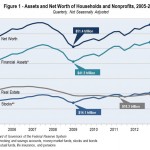
Have your assets and net worth increased since 2005? According to the Federal Reserve, if your assets and net worth have not increased, you probable have a balance sheet dominated by housing, are in a lower income group, a member of a minority and have a lower than average educational attainment. As seen in the […]
Economic Enigma – High Unemployment, Low Incomes and Record Stock Prices
March 7, 2013 Leave a Comment
The stock market has been in recovery mode since early 2009 with stock prices more than doubling as the Dow Jones surges past 14,000. Americans have regained a substantial portion of the wealth that vanished during the initial years of the financial crisis. A good portion of the increase of household net worth was based […]
Many Americans Are Doomed To A Miserable Retirement
January 15, 2013 Leave a Comment
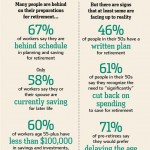
Retirement used to be portrayed as the ultimate reward in America once the work career was over. The dream of an indolent lifestyle comprised of endless golf rounds and vacation trips is still within the realm of reality for many Americans, but for others, retirement is likely to be a miserable life of frugality and […]
Debt Settlement Firms Often Put Consumers In Worse Position
October 27, 2012 Leave a Comment
It seems so compelling – make a simple phone call and a debt settlement company will take it from there by negotiating down your debts and making you debt free in just a couple of years. Most consumers, at their own peril, never seem able to remember the maxim that “if it sounds too good […]
If You Shop At Wal-Mart, You Probably Live Paycheck To Paycheck
August 19, 2012 Leave a Comment
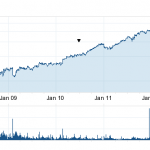
Wal-Mart recently announced an increase in both sales and profits for the second quarter. Earnings increased to $1.18, up 8% from the prior year’s quarter and total quarterly revenue increased 4.5% to $114.3 billion. Wal-Mart Stores (WMT) is the world’s largest retailer and its annual sales of almost $500 billion exceed the gross domestic product […]
Ridiculous Media Hype On Poverty Levels Miss The Real Issues
July 26, 2012 Leave a Comment
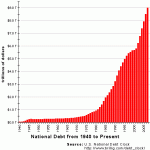
According to Yahoo Finance, the number of Americans living in poverty is approaching levels not seen in 40 years. The latest Census numbers won’t be released until the fall, but economists surveyed by the AP project that the poverty rate will climb from 2010’s 15.1% and reach a level as high as 15.7%. This will […]
Achieving The “American Dream” Is A Fantasy For Many – How Do You Measure Up?
July 21, 2012 Leave a Comment
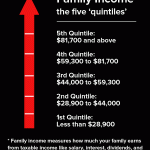
A recent study by The Pew Charitable Trust concluded that the current generation has little to look forward to in achieving the “American Dream”. In fact, fewer that one-third of Americans can expect to exceed the level of wealth and income achieved by their parents. This depressing study, entitled “Pursuing the American Dream” probably only […]
Government Contemplates Requiring Restaurants to Deny Service To Obese Patrons
November 7, 2009 Leave a Comment
Do The Obese Have The “Right” To Become More Obese? In an attempt to help those who cannot help themselves from becoming obese, the government has implemented new legislative fiats requiring restaurants to post the calorie count of each item on their menus. Unfortunately, the heavy hand of government dictate is producing counter productive results. […]
Europe Sees The Light On CFL
September 2, 2009 Leave a Comment
Europe Bans 100W Light Bulb A European Union ban on the manufacture and import of 100 watt and frosted incandescent light bulbs, in use since the 19th Century, has come into force. The EU wants the bulbs to be replaced mainly by longer-lasting compact fluorescent lamps. The Energy Saving Trust says fluorescent lighting uses 80% […]