Baseball great, 48 year old Roger Clemens, faces the equivalent of a death sentence with the threat of a 30 year prison term after being indicted for making false statements, obstruction and felony perjury.   The indictment follows an inquiry into Mr. Clemen’s alleged use of steroids, during which Mr. Clemens flatly denied ever using steroids or human growth hormone.

Federal prosecutors, miffed by Mr. Clemens audacity to make allegedly “false statements under oath”, announced the indictment today and seem prepared to vigorously prosecute Mr. Clemens.  US Attorney Ronald Machen, said in a statement that “The Department of Justice takes referrals from congressional committees very seriously”.

Mr. Clemens continues to maintain his innocence, stating on Twitter that, “I never took HGH or steroids.  And I did not lie to Congress. I look forward to challenging the government’s accusations, and hope people will keep an open mind until trial. I appreciate all the support I have been getting. I am happy to finally have my day in court.”

The ironic part of this human tragedy is that Roger Clemens was man enough to state his innocence, forgoing his Fifth Amendment rights and agreeing to testify before Congress.  According to sports writer Jeff Passan,

Clemens wasn’t in trouble when baseball released George Mitchell’s report on steroid use. Sure, it disintegrated the purity of everything he spent 24 seasons building, but Clemens was no felon. Just a guy who chose the wrong drug dealer. Only when he went on the warpath to prove his innocence did Clemens tiptoe near a law that people in power are interested in prosecuting.

The indictment, 19 pages long and rich with information, highlights 15 utterances the government deemed false leading to an obstruction of justice charge. Testimony regarding steroids, HGH and vitamin B12 comprise three false statement charges and two more perjury charges, each of which could carry five years prison time.

On page 10 is the statement most horrifying to Clemens, the rubbing alcohol in his gaping wound: “The Committee did not issue CLEMENS a subpoena, and CLEMENS was under no obligation to testify. CLEMENS retained his right under the Fifth Amendment to the United States Constitution to refuse to answer any questions that might tend to incriminate him.”

He could’ve taken the Mark McGwire tack, treating the Fifth like his best friend. He could’ve done what so many other accused steroid users did: not say a thing and let the allegations fade into the ether, a black mark, sure, but not one that torpedoes a life. He could’ve done what his friend Andy Pettitte did: admit use, apologize for it and move on.

There remains the possibility, of course, that Clemens never did use steroids,…

Still, it’s harrowing to see another all-time great baseball player, steroids or not, paraded in front of the country as an example that thou best not trifle with the feds.

Does the country really want to see Roger Clemens put in jail, made an example of, by over zealous prosecutors seeking to exhibit the Federal Government’s stern authority over its citizens?  Readers of this column are already aware of the fact that the United States incarcerates more of its citizens than any country on earth -see How The US Justice System Turns Jaywalkers Into Violent Criminals.

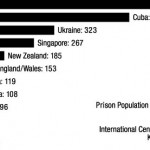
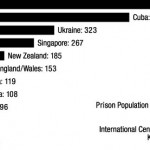
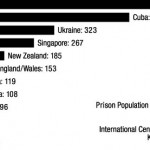
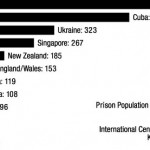
The United States currently has in prison 762 people per 100,000.   The incarceration rate in France is 96 people per 100,000.   Is the United States a land full of criminals or do we have a justice system run amok??  People lie everyday, including those who lead our country.   Doesn’t the Justice Department have better things to do?

us-prison-population

(0) Comments    Read More   

The fact that the United States imprisons more of its citizens than any other nation on earth has been previously discussed - see United States - A Nation of Criminals.

prison_population

There are approximately 2.3 million Americans in jail, equivalent to 1 out of every 100 Americans.  America has in its jails almost 25% of the entire prison population in the world, yet we represent only 5% of the world’s population.   Sentencing for similar crimes in other nations results in much smaller prison sentences.

The increase in jail sentences has skyrocketed since the mid 1970’s when America was more in line with the rest of the world,  imprisoning only around 110 people per 100,000.   What would be considered a mild crime in another country, such as writing a bad check, results in prison time in the United States.

Jail time for drug use has grown with “get tough” drug policies which have done nothing to discourage rampant drug abuse.  A record total of 7.2 million people in 2007 were either in jail, on parole or on probation.   Black males in the 20 to 39 age group represented a third of all people incarcerated.  Convicted criminals lose the right to vote which further alienates them from society.

A more enlightened attitude towards imposing harsh jail sentences on non violent offenders is now being considered by some as a smarter way to deal with crime.

After decades of supercharged incarceration rates, our bloated prison system is straining under its own weight, and policy makers are finally being forced to deal with the need to shrink it.

According to a study last year by The Pew Center on the States entitled “One in 100: Behind bars in America 2008,” the prison population of the United States has nearly quadrupled over the last 25 years while the nation’s population has grown by less than a third.

This comes at a cost. According to a report published last month by the Vera Institute of Justice, an independent, nonprofit research group, $1 in every $15 from states’ general funds is now spent on corrections. That doesn’t work in a recession.

Much of the rise in the prison population was because of draconian mandatory sentencing laws that are illogical — sociologically and economically.

On the sociological side, as the criminal justice expert Joel Dvoskin of the University of Arizona explained to me, data overwhelmingly support the idea that locking up low-risk, nonviolent offenders makes them worse, not better.

A study from a decade ago that was published in the journal American Psychologist put it this way: “Department of corrections data show that about a fourth of those initially imprisoned for nonviolent crimes are sentenced a second time for committing a violent offense. Whatever else it reflects, this pattern highlights the possibility that prison serves to transmit violent habits and values rather than to reduce them.”

There are encouraging signs that policy makers are moving in the right direction. Many states have moved to repeal mandatory minimums, and there is a bill in Congress to repeal federal mandatory sentencing. Furthermore, Attorney General Eric Holder seems to be thinking about this issue the right way. Speaking to the American Bar Association last week, he said, “There is no doubt that we must be tough on crime. But we must also commit ourselves to being smart on crime. … We need to adopt what works.”

If imprisoning 1 out of every 100 Americans had resulted in virtually eliminating crime, our current policies would make a lot of sense.  Since our current policy has not eliminated crime but in fact is probably producing more violent criminals, a serious look at reforming the system is needed.  Many violent criminals certainly belong in jail, some even deserve capital punishment but the current system seems to have spun out of control with negative consequences for all involved.  An in depth review of mandatory sentences and alternatives to prison time for non violent offenders seems long overdue.

(0) Comments    Read More   

Law and Order, or A System Gone Berserk?

The statistics on the number of  Americans incarcerated are truly eye catching, especially when compared to other nations.

prison_population

There are approximately 2.3 million Americans in jail, equivalent to 1 out of every 100 Americans.  America has in its jails almost 25% of the entire prison population in the world, yet we represent only 5% of the world’s population.   Sentencing for similar crimes in other nations results in much smaller prison sentences.

The increase in jail sentences has skyrocketed since the mid 1970’s when America was more in line with the rest of the world,  imprisoning only around 110 people per 100,000.   What would be considered a mild crime in another country, such as writing a bad check, results in prison time in the United States.

Jail time for drug use has grown with “get tough” drug policies which have done nothing to discourage rampant drug abuse.  A record total of 7.2 million people in 2007 were either in jail, on parole or on probation.   Black males in the 20 to 39 age group represented a third of all people incarcerated.  Convicted criminals lose the right to vote which further alienates them from society.

Some obvious questions to ask are:

  1. Does America have an unusually large number of criminals?
  2. Are the sentencing laws too tough for certain crimes?
  3. Are the police forces overzealous or selective in enforcing the law?
  4. Should alternate methods such as counseling and treatment be offered instead of harsh prison sentences?
  5. Would the huge cost of maintaining a large number of prisons and guards be better spent on cheaper at home monitoring and out of prison rehabilitation services?

The one certain fact is that no other nation on earth comes close to the aggressive policies of imprisonment seen in the US.

Silver Lining?

The current economic downturn is again proving the old saying that there is a bright side to everything.   With State budgets under sever stress, many are finally asking if the system can be changed to reduce imprisonment time while still protecting society.  Consider the following :

States Seek Less Costly Substitutes for Prison -

Cash-strapped states are increasingly turning to alternative sentencing methods and to streamlined probation and parole as a way to keep low-level offenders out of prison and in their communities.

The alternative sentencing methods have been in limited use for years, often with little funding and less publicity. But recently they have gained in popularity across the country and have attracted interest from lawmakers. The measures include drug courts, which allow low-level drug offenders to avoid prison time through treatment and intense, personal, weekly intervention by a judge, and at least 500 courts for people arrested for driving while intoxicated. Drivers avoid jail by attending regular alcohol-treatment classes and by submitting to random tests.

States have also begun to shorten probation and to reduce the number of people sent to prison for technical violations, such as missing appointments. Some states are also more readily granting parole to prisoners as they become eligible, reversing a trend that kept even parole-eligible inmates locked up longer.

These trends are showing up almost everywhere as a direct response to governors and state legislatures looking with alarm at prison costs eating up increasing shares of their budgets.

But what is striking, experts say, is how some states with reputations for being tough on crime are most rapidly embracing these policies, which might have once been dismissed as the product of liberal think tanks and soft-on-crime leniency.

Texas is a case in point. From 1978 to 2004, the inmate population rose 573 percent and the state’s population increased 67 percent. With hard sentencing laws and some conservative judges, Texas built a “lock ‘em up” reputation. The state has more than 155,00 inmates and leads the nation in putting prisoners to death.

texas-prison-pop

The changes, implemented in the 2007 legislative session, included more funding for drug and DWI courts. New rules shortened the average probation time from 10 years to five.

The state also ordered the parole board to raise its parole rate to an earlier number of 31 percent; the proportion of eligible inmates granted parole had slipped to 26 percent.

With those changes in place, prison population growth slowed to a trickle. From January 2007 until December 2008, Texas added 529 inmates to its total, a tenth of what was projected.

A powerful motivator for alternative sentencing is recidivism. For nearly 20 years, national recidivism rates have remained the same, with half of all freed inmates returning to prison within three years. But evidence shows that those who get treatment for drug and alcohol problems have a far lower rate of returning to prison.

There Is A Better Way

Obviously, the US is out of touch with the rest of the world when it comes to imprisoning vast numbers of people.  Yes, there is a better way of conducting justice instead of harsh, long prison sentences.  Unfortunately, it took a major economic upheaval before the issue  could be intelligently addressed.  Other States should look at the example of reform in Texas and initiate similar programs.

(0) Comments    Read More